
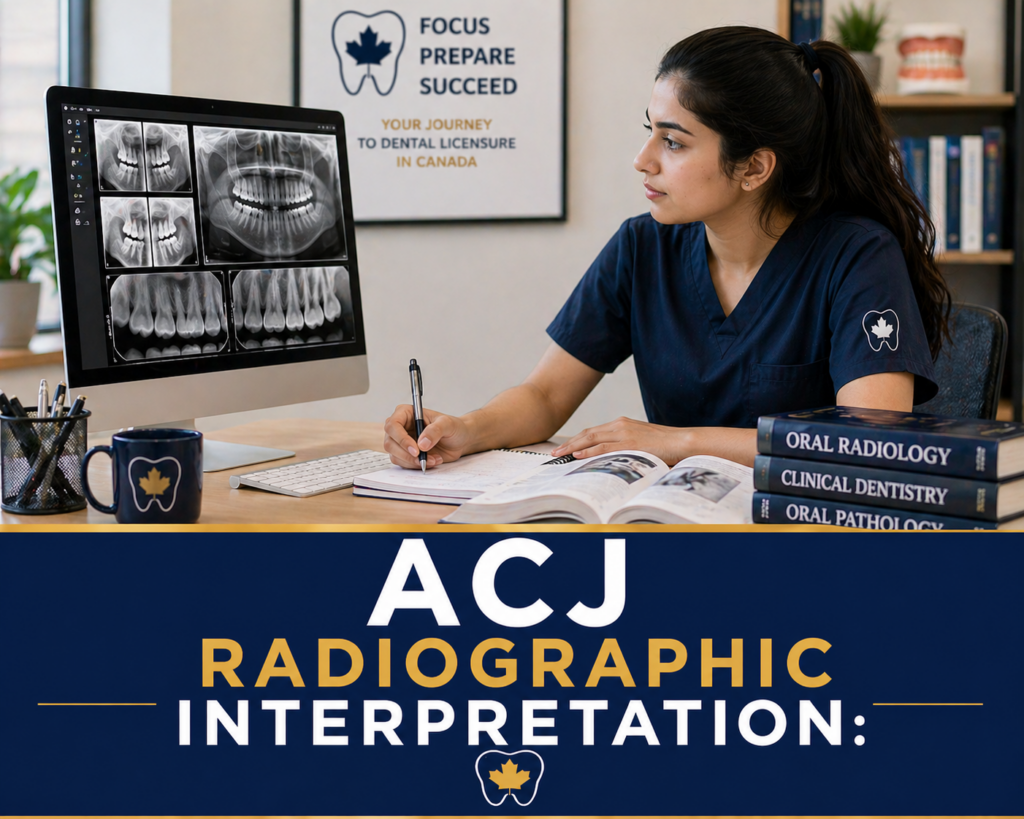
Why Radiographic Interpretation Matters in the ACJ Exam
Radiographic interpretation is one of the most important skills tested in the ACJ exam. Candidates are expected to analyze X-rays and identify clinical findings accurately.
This skill directly impacts diagnosis, treatment planning, and patient safety. Misinterpreting radiographs is one of the most common reasons candidates lose marks.
👉 Learn more: ACJ exam Canada
Types of Radiographs in the ACJ Exam
| Type | Use |
|---|---|
| Bitewing | Detect interproximal caries and bone loss |
| Periapical | Evaluate root and periapical area |
| Panoramic | Assess overall dentition and jaw structures |
Step-by-Step Radiographic Interpretation Approach
- ✔ Identify the type of radiograph
- ✔ Check image quality and orientation
- ✔ Scan systematically from one side to the other
- ✔ Look for abnormalities (caries, lesions, bone loss)
- ✔ Correlate findings with clinical symptoms
A structured approach helps avoid missing critical findings.
Common Radiographic Findings in ACJ
- Dental caries
- Periapical lesions
- Periodontal bone loss
- Impacted teeth
- Cysts or radiolucencies
Common Radiographic Interpretation Mistakes
- ❌ Missing small carious lesions
- ❌ Confusing normal anatomy with pathology
- ❌ Ignoring image quality issues
- ❌ Overdiagnosing minor findings
- ❌ Not linking radiographic findings to clinical decisions
How Radiographs Impact Clinical Decisions
In the ACJ exam, radiographic interpretation is not tested in isolation. You must use it to make correct clinical decisions.
- ✔ Confirm diagnosis
- ✔ Decide treatment plan
- ✔ Assess severity of disease
- ✔ Avoid unnecessary procedures
👉 Learn treatment planning: ACJ treatment planning
How to Practice Radiographic Interpretation for ACJ
- ✔ Review real dental X-rays daily
- ✔ Practice identifying key patterns
- ✔ Use case-based questions
- ✔ Compare normal vs abnormal images
- ✔ Practice under timed conditions
Official Resources
FAQs
Are radiographs important for ACJ?
Yes, radiographic interpretation is a key component of diagnosis and clinical decision-making in the ACJ exam.
What types of X-rays should I study?
Focus on bitewing, periapical, and panoramic radiographs.
How can I improve my skills?
Practice regularly with real cases and focus on identifying patterns and abnormalities.